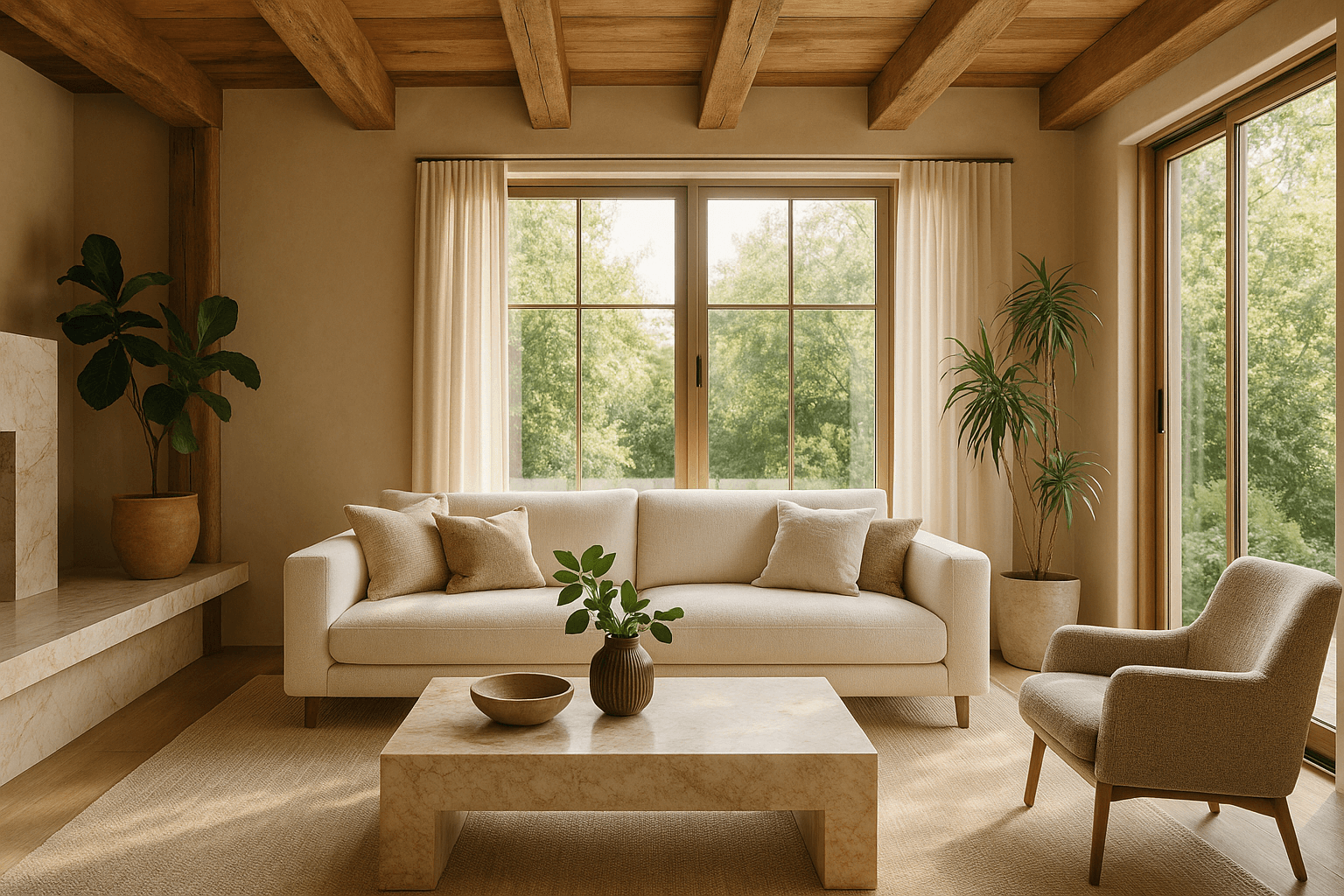
In 2025, luxury interior design is undergoing a profound transformation.
Once dominated by excess and rare resources sourced without regard for their impact, today’s high-end spaces are shaped by materials that are as responsible as they are beautiful.
This isn’t a passing trend. It’s a cultural shift where authenticity, provenance, and sustainability are the new measures of prestige. Choosing reclaimed wood over freshly milled lumber, or marble from certified sustainable quarries over unverified sources, is now seen as a statement of discernment and taste.
True luxury no longer means having what others can’t afford — it means choosing what others haven’t thought to value.
The Conscious Luxury Revolution
For decades, rarity was defined by scarcity through exploitation. Now, scarcity is defined by the finite availability of responsibly sourced materials.
The affluent homeowner of today is looking for:
- Materials that tell a story of stewardship and skill.
- Emotional satisfaction from knowing their choices have a positive impact.
- Spaces that are as good for the world as they are for the soul.
This is ethical luxury — beauty backed by responsibility.
Reclaimed Wood: History as Luxury
Reclaimed wood captures more than warmth and texture — it captures time.
Beams from a century-old barn, heart pine from historic estates, or teak flooring from old-world structures bring visible history into modern spaces.
Its luxury lies in what cannot be replicated:
- Natural patina that only decades can create.
- Subtle imperfections — nail holes, weathering, and grain variation — that tell a story.
- Environmental value through reduced deforestation.
In contemporary design, reclaimed wood appears in:
- Statement walls
- Custom furniture
- Bespoke cabinetry
The craft lies in celebrating the imperfections rather than hiding them.
Natural Stone: Earth's Permanent Luxury
Natural stone has been admired for millennia for a reason: its beauty is timeless, and its durability unmatched. With responsible sourcing, it’s also a sustainable choice.
Why it endures:
- Formed over millions of years, it can last for centuries more.
- Local sourcing minimizes transport impact and connects designs to place.
- Certified sustainable quarries ensure responsible extraction.
Today’s technology means stone can be cut thinner, used more efficiently, and finished in textures ranging from mirror-polished to naturally weathered — all while reducing waste.
Sustainable Metals: Refined Responsibility
Metal detailing in luxury interiors is shifting toward recycled and responsibly sourced materials.
Gold, silver, and platinum from recycled sources match the purity of newly mined metals without the extraction footprint. Copper and brass, prized for their warm tones and antimicrobial qualities, develop a natural patina that grows richer over time — a perfect alignment with the philosophy of materials that improve with age.
Natural Textiles: Luxury with Legacy
In textiles, organic and heritage-sourced fibers are replacing synthetics at the top end of the market. Organic cotton, linen, wool, and silk are softer, more durable, and healthier for indoor air quality.
Heritage wool from rare breeds not only supports agricultural biodiversity but also produces unique natural colors and textures, making every piece distinct.
Innovative Bio-Materials: The Future Arrives
Cutting-edge bio-materials are creating a new design vocabulary. Mycelium leather from mushrooms, bacterial cellulose for surfaces, and plant-based composites are not only biodegradable but can be tailored for specific textures, colors, and durability.
These materials are no longer experimental — they are appearing in luxury furniture, wall finishes, and architectural features.
The Craftsmanship Connection
Sustainable luxury isn’t just about the materials — it’s about the people who work with them.
Master craftspeople understand how to:
- Maximize the natural character of a material.
- Preserve traditional regional techniques.
- Create pieces that feel alive with human touch.
Their skills add emotional value and cultural depth that no mass-produced item can match.
Installation & Maintenance: Designed to Last
Many sustainable materials become more beautiful with time.
Reclaimed wood deepens in tone. Stone develops a softened surface. Metals take on a rich patina.
Caring for these materials often means embracing their aging process — using non-toxic cleaners, gentle protective finishes, and repair over replacement.
Investment Value
While the upfront cost may be higher, the long-term economics often work in the homeowner’s favor:
- Durability means fewer replacements.
- Timeless aesthetics ensure relevance for decades.
- Market demand for sustainable luxury is rising, increasing property value.
Working with the Right Suppliers
With demand comes greenwashing. Authentic sustainable luxury materials are backed by:
- Certifications such as FSC for wood, Cradle to Cradle for manufactured products, and regional quarry sustainability seals.
- Transparent supply chains that trace the material from origin to installation.
Conclusion
Sustainable luxury materials are more than a design choice — they are a philosophy.
They allow homeowners to create spaces that reflect their values, honor craftsmanship, and protect the planet.
The future of high-end design isn’t just about how it looks today — it’s about how it matters tomorrow.
