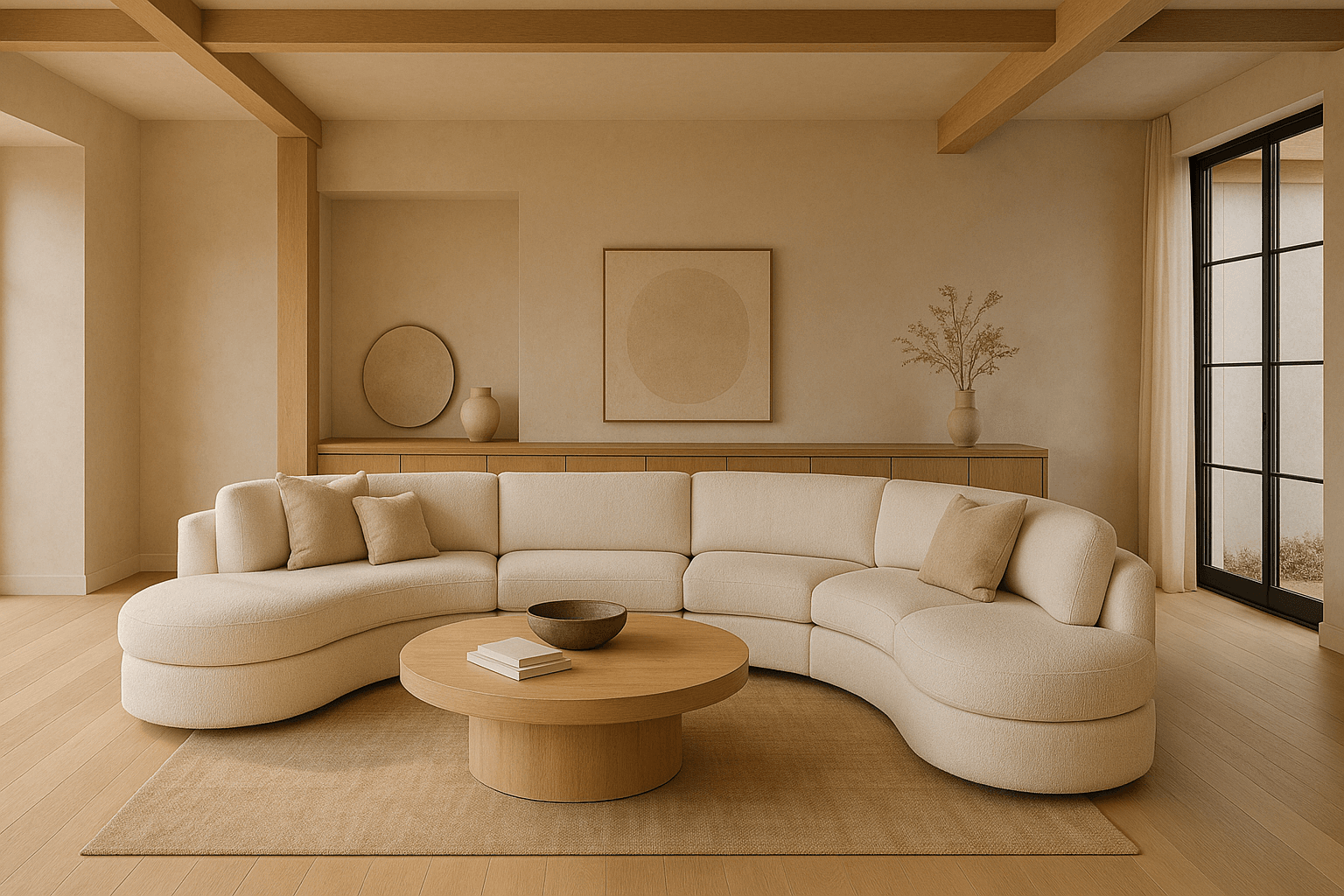
Minimalism in luxury design is evolving. The once-cool, almost clinical aesthetic is softening into warm minimalism—a style that blends clean lines with curved forms, tactile materials, and comforting tones. It’s minimalism that feels inviting, not stark.
In 2025, discerning homeowners are moving away from “look but don’t touch” interiors toward spaces that feel authentically livable, without sacrificing elegance.
Beyond Cold Minimalism: The Human Touch
Past minimalism sometimes prioritized visual drama over comfort. The warm minimalist movement keeps the discipline of minimalism—intentionality in every element—but adds human warmth through:
- Organic curves that soften architecture
- Natural materials that invite touch
- Earthy, welcoming colors that soothe rather than intimidate
The Psychology of Curves in Luxury Interiors
Curves are more than a design trend—they calm the mind. Research shows rounded shapes can reduce stress and foster comfort, making them perfect for spaces where relaxation matters.
How curves transform spaces:
Furniture as Art
A curved sofa doubles as seating and sculpture, offering movement and softness in one statement piece.Encouraging Connection
Round dining tables or curved sectionals naturally create more social, inclusive layouts.Balancing Architecture
Against sharp walls and angles, organic shapes add visual relief, creating harmony.
Material Selection: Touch, Texture, Timelessness
The warm minimalist palette favors natural, character-rich materials over uniform surfaces.
- Stone with personality — veined marble, pitted travertine, and warm limestone add depth without busy patterns.
- Wood as warmth — think subtle grain patterns in accent walls, slim furniture profiles, or clean-lined cabinetry.
- Textiles that invite touch — boucle, linen, and alpaca create luxury through texture rather than pattern.
Color Psychology in Warm Minimalism
The right palette is essential to create warmth without losing sophistication.
- Foundation: creamy whites, soft beiges, muted taupes.
- Accents: sage green, terracotta, ochre—tones pulled from nature.
- Metallics: brass, copper, and rose gold for a refined glow.
Where to Use Curved Elements
Living Room – Curved sectionals, round coffee tables, softly arched shelving.
Dining Room – Oval tables, curved banquettes, flowing chandeliers.
Bedroom – Rounded headboards, plush curved chairs for reading nooks.
Bathroom – Oval tubs, curved mirrors, rounded vanities for a spa-like feel.
Lighting in Warm Minimalism
Lighting completes the look. The goal: soft, layered illumination.
- Natural light: filter with linen drapes or bamboo shades.
- Sculptural lighting: organic pendant forms, ceramic lamp bases.
- Layered approach: recessed ceiling lights, accent lighting, and warm-toned task lamps.
Technology Integration: Sleek and Invisible
From hidden speakers to cabinet-concealed TVs, warm minimalism embraces technology that works behind the scenes—maintaining visual calm while delivering modern convenience.
Longevity and Investment Value
Because it relies on timeless materials and shapes, warm minimalism:
- Ages gracefully
- Holds strong resale appeal
- Requires fewer updates over time
Working With Design Professionals
Warm minimalism looks simple but demands precision. A skilled designer can balance restraint with richness, ensuring your space is neither bland nor overdecorated.
Look for a designer with:
- A minimalist portfolio
- Strong material sourcing knowledge
- Lighting and proportion expertise
Conclusion: Luxury That Feels Like Home
Warm minimalism is the future of luxury interiors—beautiful, functional, and human. By blending curved lines, natural textures, and comforting tones, it creates spaces you want to live in, not just look at.
Want to bring warm minimalism into your home? Let’s design a space that’s as inviting as it is sophisticated.
